
Psychology built much of its knowledge base on a remarkably narrow sample of humanity. In 2010, Joseph Henrich and colleagues put a name to this problem: WEIRD, an acronym standing for Western, Educated, Industrialized, Rich, and Democratic. Their analysis found that the overwhelming majority of psychological research had been conducted on participants from this narrow demographic slice, yet the field had been treating those findings as universal laws of human behavior.
For clinicians practicing within Acceptance and Commitment Therapy and the broader Contextual Behavioral Science framework, this is not merely an academic concern. It is a practical one that touches every session.
The Scope of the Bias
Henrich and colleagues estimated that WEIRD populations represent roughly 12 percent of the world's population, yet they accounted for approximately 96 percent of the psychological research samples reviewed at the time. Even more striking, American undergraduates alone made up the majority of those samples. When researchers tested whether findings generalized across cultures, they frequently did not. Perceptual, reasoning, fairness, and even self-concept measures showed substantial variation across populations.
This means that constructs foundational to many evidence-based therapies, including psychological flexibility, experiential avoidance, and the structure of the self, were operationalized and validated almost entirely within WEIRD contexts.
What This Means for ACT Practice
ACT emerges from Relational Frame Theory, a behavioral account of language and cognition grounded in the principle that learning histories shape how verbal stimuli function. This functional, contextual foundation is actually well-positioned to absorb the WEIRD critique, because it never assumed that the content of cognition was universal. What matters in RFT is the relational operant behavior, not the specific cultural content through which it is expressed.
Even so, clinicians should hold a few things carefully.
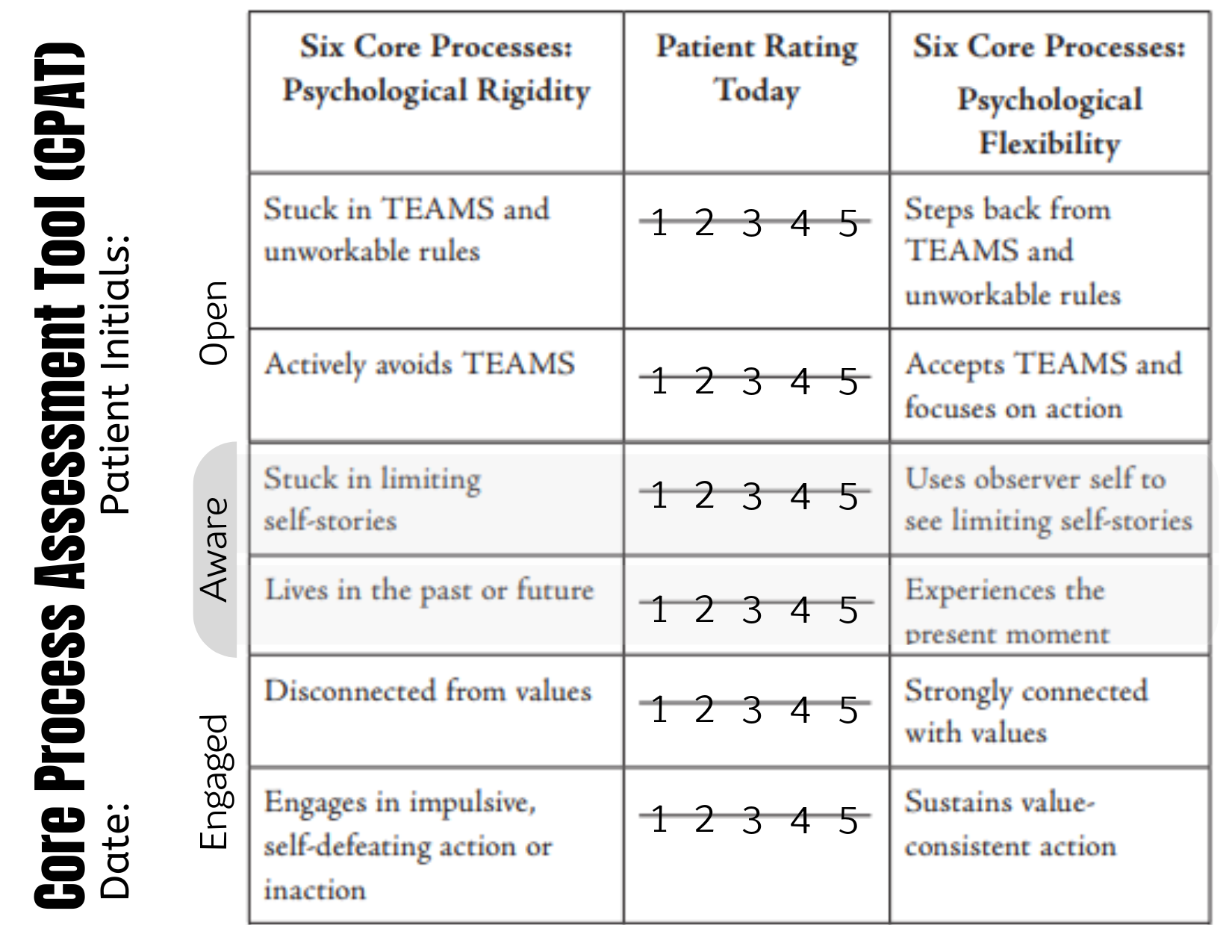
The specific metaphors, defusion techniques, and values clarification exercises most commonly used in ACT manuals were developed within WEIRD cultural contexts. A leaves-on-a-stream exercise lands differently depending on a client's relationship to stillness, nature, and internal reflection. Values hierarchies that emphasize individual autonomy may conflict with collectivist frameworks in which identity is fundamentally relational and communal. The six core processes of ACT remain functionally coherent across contexts, but the clinical forms through which those processes are contacted may require meaningful adaptation.
Psychological flexibility, as a target, is itself a value-laden construct. Flexibility toward what, in service of what, and as defined by whom are questions that a clinician must ask rather than assume.
A Practical Orientation
Clinicians working with clients whose backgrounds differ from the dominant research sample are already doing something important when they treat the functional analysis as primary and the manual as secondary. Asking what a thought does rather than what it means, tracking the workability of behavior in the client's actual context, and remaining genuinely curious about how a client's cultural history shapes their verbal repertoire are all moves that ACT's framework supports and that the WEIRD critique demands.
The goal is not to abandon the evidence base. The goal is to hold it accurately, which means knowing whose experience built it and remaining open to what has yet to be studied.